By Maria Bregman, writer and art-critic
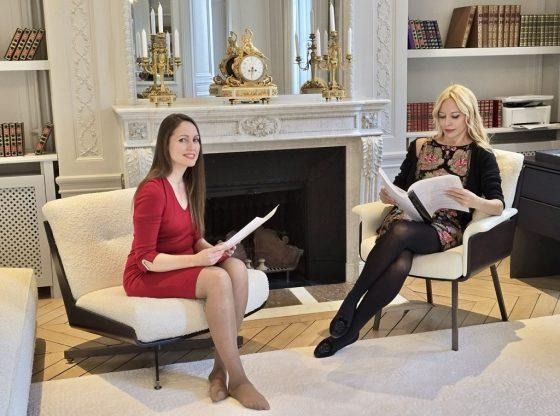
My five-hour conversation with Elena Shaura, a painter, novelist, and doctor of philosophy, unfolded in her exquisite Parisian apartment, a historic building nestled in the heart of the city. The soft, aristocratic creak of the antique parquet floor accompanied our conversation, while the windows offered a breathtaking panorama of Parisian life. Elena greeted me with her signature elegance and radiant smile, leading me through rooms that felt like a harmonious symphony of art, history, and refined taste. Her study, filled with light and purpose, stood out as a sanctuary of creative energy, while her beautifully decorated living room reflected her penchant for detail and beauty.
Elena Shaura is not just an artist; she is a storyteller in every sense of the word. Her perspective on art, life, and the creative process is nothing short of captivating. Our conversation naturally began with the question: “Tell me about yourself.” It might seem reductive for someone of her intellectual and artistic depth, but it opened a window into the life of a woman whose talents span continents and disciplines. Rather, Socrates’ invitation to “Talk, so I can see you” is more appropriate for the many faces she has to reveal. For Elena, the act of creation is a multiple re-living of her life, a process which is further enriched by the many media she employs.
Born and raised in Russia, Elena now divides her time between Monaco, Paris, and London. Her life is a testament to her multifaceted talents and relentless curiosity. From philosophy and law to painting and writing, she has mastered the art of navigating seemingly disparate disciplines. Her artistic practice embraces oils, acrylics, and experimental photography, blending artificial intelligence with traditional techniques. This eclectic approach mirrors her richly layered life experiences, as her work is as much about embodying a vision as it is about mastering a technique.
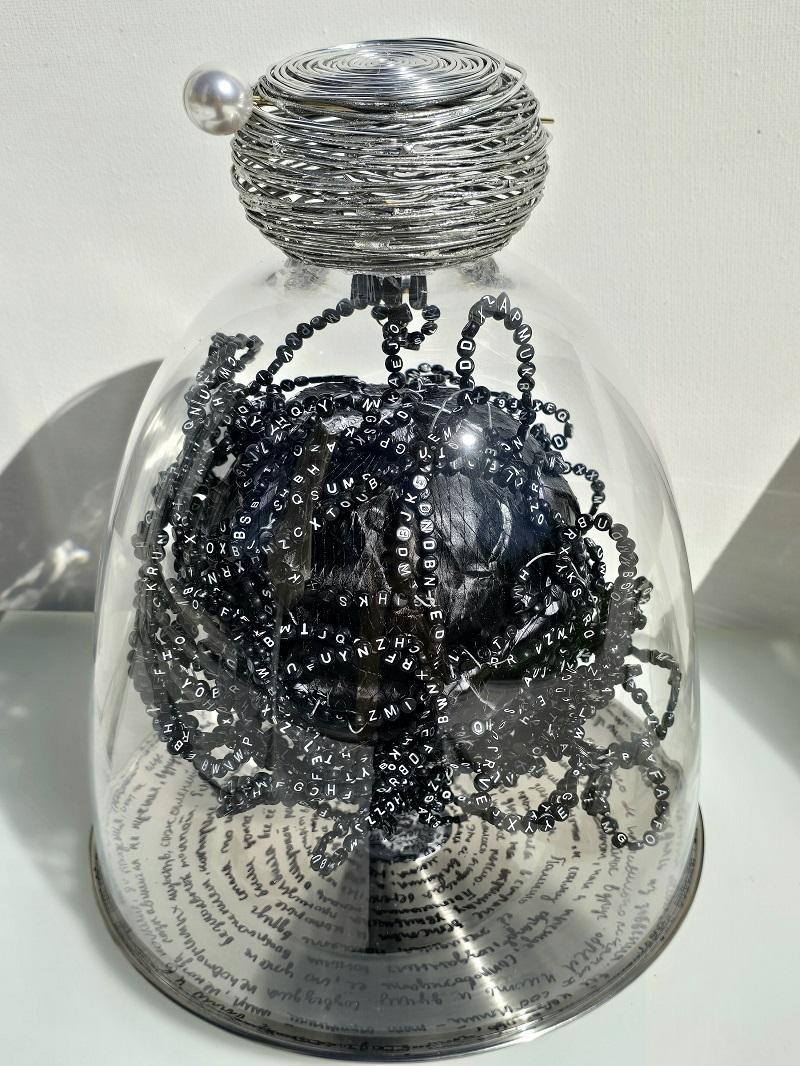
We delved into her current projects, including her forthcoming novel and its artistic counterpart. The novel, she revealed, draws on autobiographical material, family history, and archival research about a city on the Volga River in Russia. The Volga becomes a living, breathing entity in the story, its turbulence and seasonal transformations echoing the protagonist’s inner journey. Elena explained how this identification with the river is mirrored in her artwork, where text often appears fluid and flowing, symbolising the manuscript’s journey.
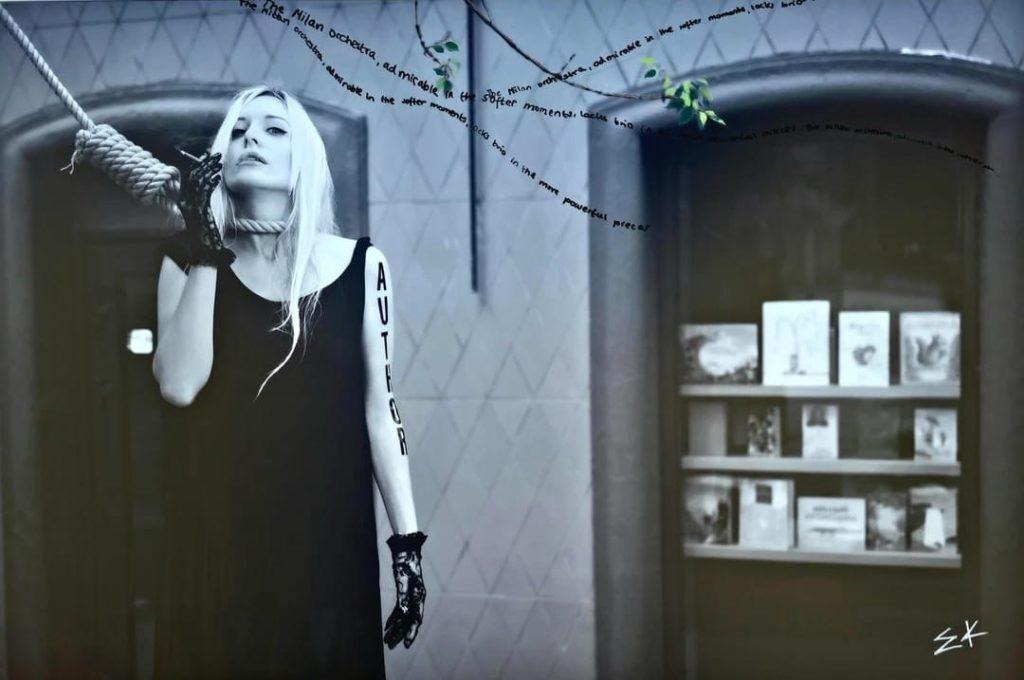
Her artistic project, “Death of the Author”, arose from her emotional experience of completing the novel. The unsettling feeling of liberation and separation from the characters she had created inspired her to reimagine the “author” in a visual medium. Through this project, she refuses to let the author “die,” instead giving herself a new artistic life by transforming her narrative into visual form.
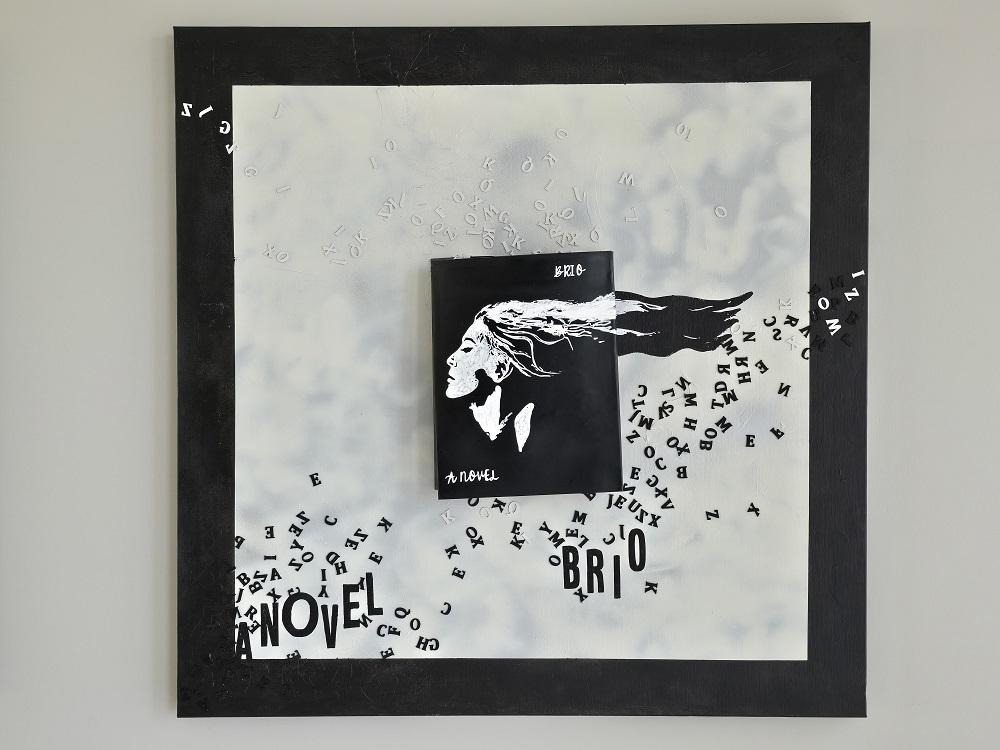
A particularly fascinating dimension of her work is the integration of sound and visuals. In the spirit of collaboration implicit in Elena’s multi-sensory installations, many of her artworks are accompanied by “Background Voices”, recordings that layer three perspectives: her own, a critic’s, and an observer from the street. This multi-sensory approach invites viewers to move beyond passive observation, immersing them in a dialogue that enriches their engagement with the art. Thus, an auditory dimension is added to her art and the three distinct perspectives create a dialogue that engages viewers on multiple levels.
We also discussed “Death of the Author” in depth. For me, as a writer, this project resonated profoundly. It visualises the emotional complexity of an author’s relationship with their work and the dynamic interplay between writer and reader. Elena’s use of contemporary, even unsettling, techniques to depict the “letting go” of one’s creation felt both poignant and groundbreaking.
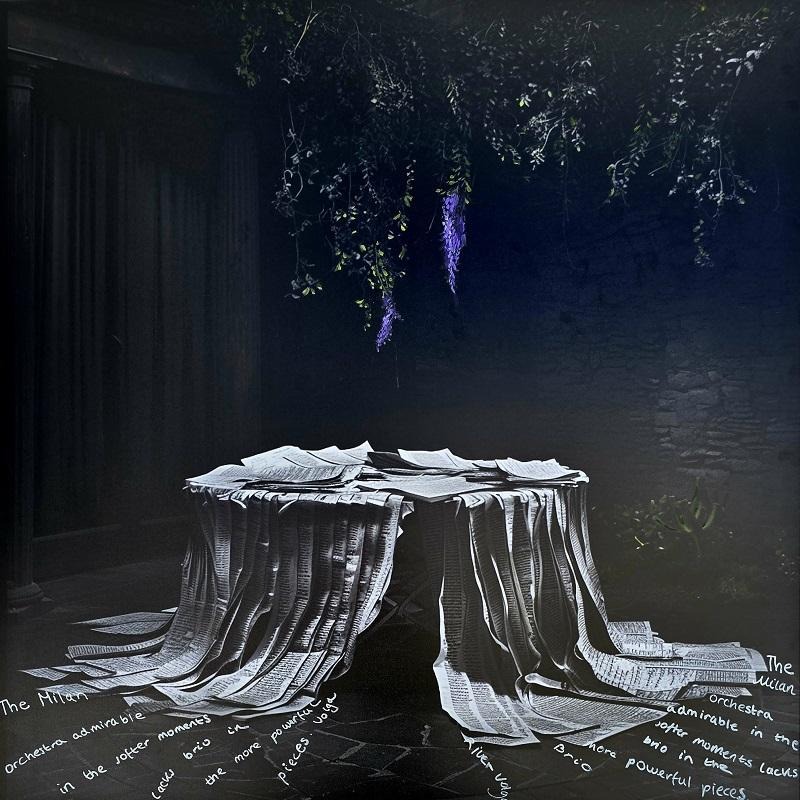
Elena’s artistic journey reflects her philosophy that creativity transcends boundaries—between disciplines, between artist and audience, and even between the personal and the universal. Her works, whether on canvas or in print, are infused with a sense of timelessness and inquiry.
To encapsulate Elena Shaura’s creative universe is to attempt to define the indefinable—a world where intellect meets instinct, where the disciplines of philosophy, art, and literature collide in harmonious discord. Her ability to inhabit multiple creative identities simultaneously underscores her belief that the act of creation is a dynamic process, not bound by medium or genre.
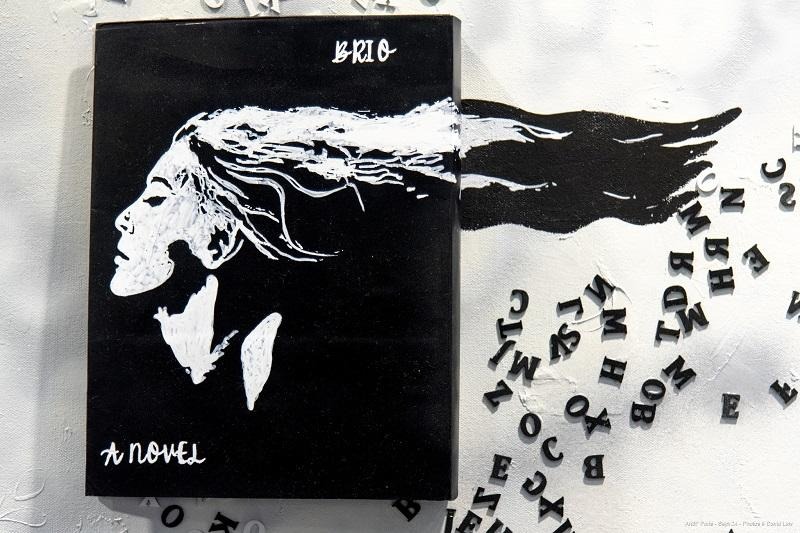
Reflecting on her dual roles as an artist and a novelist, Elena shared that her artistic works often act as companions to her written narratives. “Art gives me another option to tell versions of a story, and to not just relay a story but to live it, and in a different medium. Art also opens a new door from the finished novel. It’s a way of moving on and challenges the notion of finality, of creating something which is finished”.
This symbiosis between text and image was particularly evident in her exploration of the Volga River. Elena spoke passionately about how this majestic river became a character in her novel—a force of nature that mirrors the protagonist’s journey toward self-awareness. “The Volga is not just a setting,” she said. “It’s an active participant in the story, shaping identities, driving change, and embodying the emotions of those who live alongside it.” Her canvases reflect this connection, with rippling textures and fluid forms capturing the essence of the river’s vitality.
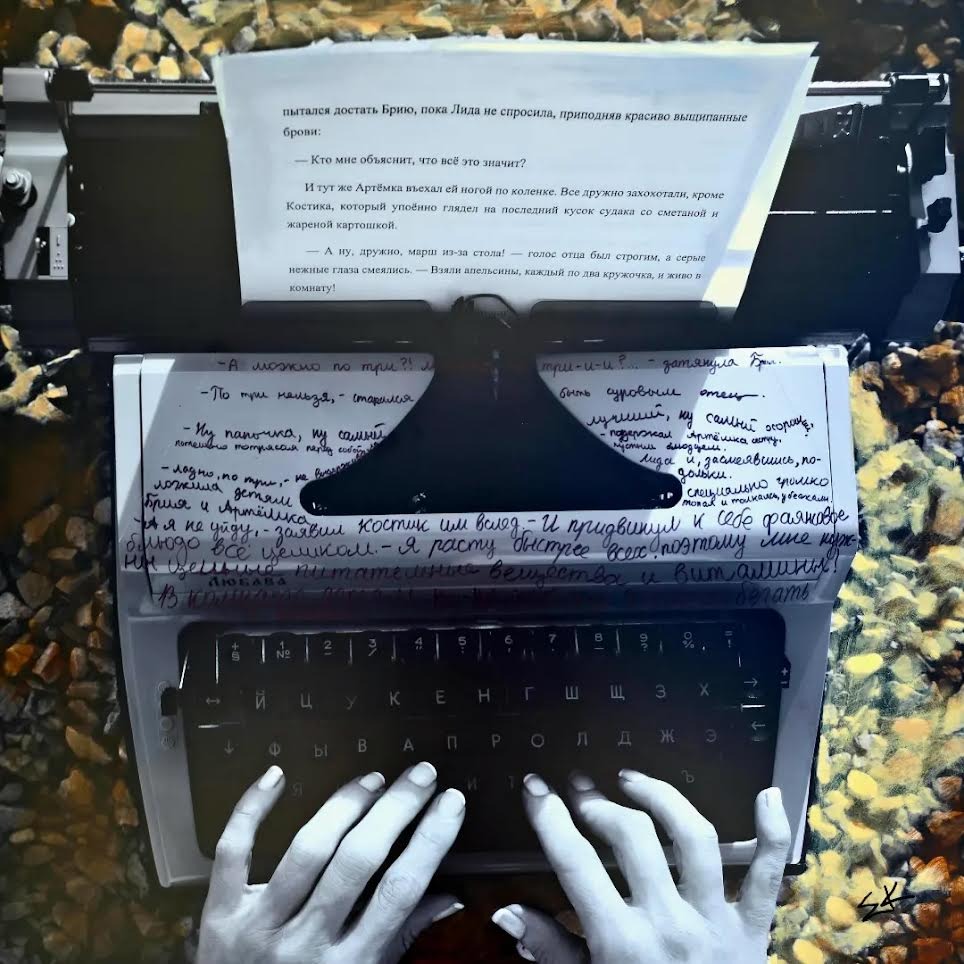
In discussing her creative process, Elena emphasised the importance of embracing complexity. This philosophy is evident in her willingness to experiment with cutting-edge techniques, such as incorporating artificially generated elements into her photography-based art. By doing so, she bridges the gap between tradition and innovation, creating works that are as thought-provoking as they are visually striking.
Another related aspect of her artistic philosophy is Elena’s approach to the idea of completion. “It’s really quite naïve to imagine a work of art can reach a state of completion. Finality is always a mirage. Of course, we have to finish something, but the artist doesn’t want to finish, and each ending is a new beginning. It’s a kind of schizophrenia, I suppose!” she muses.
Her “Death of the Author” project exemplifies this interplay between creation and reinvention. While the project originated as a response to the completion of her novel, it has since evolved into a meditation on the nature of authorship itself. By transforming her written work into visual art, Elena challenges the traditional notion of the author as a singular, omnipotent creator. Instead, she invites her audience to participate in the creative process, blurring the lines between creator and observer. Beyond “Death of the Author”, two sister projects, “Everything is Full of Angels” and “I Book”, similarly enact a parallel rewriting and reinvention of the novel in assessing the artistic relationships between the creator and what is created.
As our conversation drew to a close, I asked Elena about her future projects. She smiled, her eyes sparkling with ideas, and spoke of her desire to continue exploring the intersections of sound, visuals, and narrative. Her commitment to pushing the boundaries of art and storytelling is unrelenting.
Leaving her Parisian apartment that evening, I found myself reflecting on the rare privilege of spending time in the company of someone so deeply committed to the pursuit of creativity. Elena Shaura’s life and work are a testament to the power of imagination, the courage to explore new frontiers, and the beauty of a mind unbound by convention. Meeting Elena Shaura was an extraordinary privilege. Her warmth, intelligence, and artistic vision are truly inspiring.